


Blog & News
Freediving Safety for Beginners: 3 Essential Skills

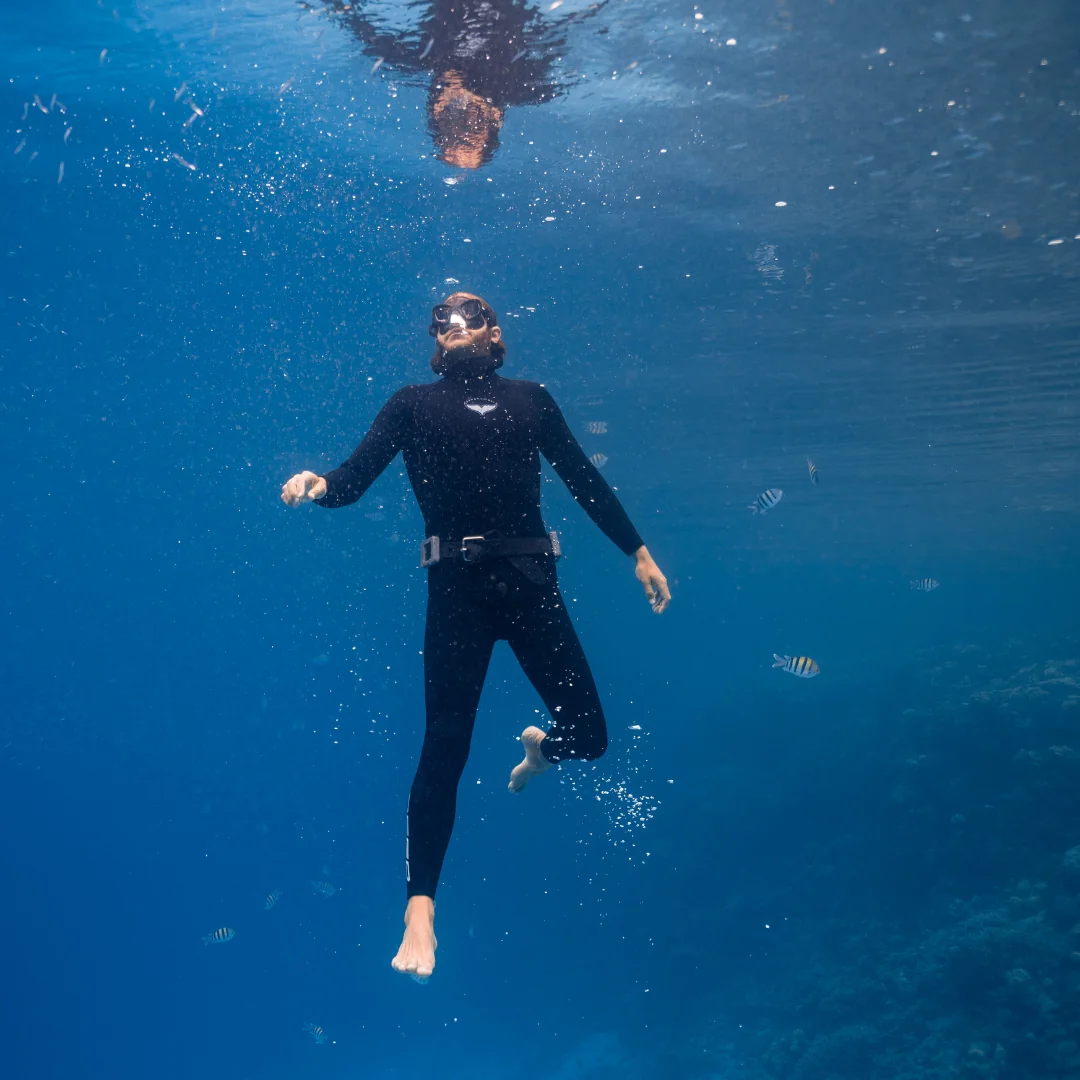
Freediving safety isn’t just about holding your breath underwater. You will have to understand how your body responds to breath-holding, learn to equalise pressure and know how to follow a buddy-supervision system. If you are a beginner, these skills are important before you think of attempting deeper dives or longer breath-holds. With proper training, practical experience and guidance from a qualified instructor, you will be able to develop the knowledge needed to enjoy freediving responsibly.
Three essential skills form the foundation of safe freediving:
- Breathing: Breathe normally and never hyperventilate before you dive.
- Equalisation: Equalise early and stop descending if you experience difficulty.
- Buddy supervision: Never freedive alone, at least not right in the beginning; always follow a trained buddy system.
4 Key Takeaways
1. Never freedive alone: Always dive with a trained buddy who actively monitors you before, during and after each dive.
2. Avoid hyperventilation: Breathe normally before a dive. Hyperventilation can increase the risk of shallow-water blackout.
3. Equalise early and gently: Learn appropriate techniques such as Frenzel. Never force equalisation or continue descending when you experience discomfort.
4. Get proper training: A recognised freediving course helps beginners develop essential breathing, equalisation, buddy procedures and risk-management skills under qualified supervision.
What Are the Most Important Freediving Safety Rules?
Understanding the basic freediving safety rules will help beginners recognise risks and make responsible decisions before entering the water. Although freediving can be practised in swimming pools and open water, the same fundamental safety principles are applicable in both the cases.
Never Freedive Alone
Don’t practise breath-hold diving without a dedicated, trained buddy. One of the most serious risks in freediving is shallow-water blackout, which can cause a diver to lose consciousness during or right after a dive.
A buddy is supposed to supervise the diver rather than swimming somewhere nearby. Both participants need to understand their responsibilities and know the appropriate safety procedures.
Never Hyperventilate Before Diving
Hyperventilation means breathing way too much before a dive, often through rapid or repeated deep breaths. It will reduce carbon dioxide levels and delay the natural urge to breathe while oxygen continues to decrease.
This can increase the risk of an unexpected blackout. Always follow the breathing preparation taught during your professional training.
Stay Within Your Training and Limits
There’s absolutely no need for beginners to match someone else’s breath hold duration and depth. They have the proper training for it, you need to progress based on your experience, training and physical condition.
Avoid competitions, maximum breath-hold challenges and any other similar attempt to push beyond your limits.
Stop When Something Feels Wrong
Pain, dizziness, fatigue, failed equalisation or uncomfortable water conditions are reasons you should stop a dive. Don’t forcefully continue just because you want to reach a particular depth. If you are unwell or experiencing ear or sinus congestion, get medical advice before returning to the water.
These precautions will help you with responsible freediving. Divers Alert Network (DAN) emphasises avoiding hyperventilation and maintaining close buddy supervision as essential safety measures.
Freediving Breathing Techniques and Safety
Breathing preparation is extremely important for freediving. Before you get into the water, you need to understand how breathing affects oxygen and carbon dioxide levels and why certain breathing habits increase the risk of blackout.
How Should You Breathe Before a Freedive?
The aim is to stay relaxed without manipulating your breathing to extend your breath-hold.
Beginners should learn to:
- Breathe calmly and naturally.
- Avoid rapid or repeated deep breaths.
- Avoid prolonged, forceful exhalations.
- Follow the breathing preparation taught by their instructor.
- Allow sufficient recovery time between dives.
The term breath up freediving describes the preparation period before a breath-hold dive. Don’t confuse it with hyperventilation or a competition to take the largest possible breath.
A good breathing routine supports relaxation, but it will not remove the risks associated with breath-hold diving.
Why Is Hyperventilation Dangerous in Freediving?
Hyperventilation is dangerous because it reduces carbon dioxide levels in the blood. Carbon dioxide contributes to the body’s natural urge to breathe, so reducing it will delay this warning signal. However, oxygen continues to be consumed while you hold your breath. That can make you dangerously low on oxygen without experiencing the usual urge to surface.
This is one reason shallow-water blackouts can occur unexpectedly, even in relatively experienced freedivers.
What Is Recovery Breathing in Freediving?
Recovery breathing is a process that’s used immediately after surfacing from a breath-hold dive. It is intended to support recovery and address the risks associated with reduced oxygen levels. You will probably come across the terms recovery breathing freediving and hook breathing freediving when researching this subject.
Hook breathing is a specific recovery technique you will learn in freediving education. Beginners must learn the correct procedure from a qualified instructor and practise it under supervision.
Recovery breathing is never a substitute for buddy supervision or rescue training. If a diver shows signs of loss of motor control or blackout, the buddy must follow the emergency procedures they have been trained to perform.
Freediving Equalisation Techniques for Beginners
When you descend underwater, increasing pressure affects the air spaces in your ears and mask. Equalisation helps balance the pressure in your middle ears and reduces the risk of discomfort and pressure-related injuries. Learning how to equalise correctly is an essential part of beginner freediving training.
When Should You Equalise During Freediving?
Start equalising early during your descent, before you experience pain or discomfort. As you move deeper, continue equalising gently and frequently to maintain comfortable pressure balance.
If equalisation feels difficult after a certain point in time, don’t descend any further. Never force the technique or continue towards your target depth while experiencing ear pain.
Congestion, allergies and sinus problems can also affect your ability to equalise. If you are experiencing persistent difficulties, it’s always a good idea to seek advice from a healthcare professional.
What Are the Different Techniques for Freediving Equalisation?
Several equalisation techniques are used in freediving to help manage pressure changes during descent. These include the Frenzel and Valsalva manoeuvres at beginner levels, as well as the Mouthfill technique at a higher level.
- Frenzel manoeuvre: Uses controlled tongue and throat movements to direct air towards the Eustachian tubes and equalise pressure in the middle ears.
- Valsalva manoeuvre: Involves gently attempting to move air towards the middle ears while pinching the nose and keeping the mouth closed.
- Mouthfill technique: Involves storing a small amount of air in the mouth and using controlled movements to equalise as the diver descends.
Each technique has different applications, and its suitability depends on the diver’s experience, anatomy and ability to equalise. Beginners should learn these techniques under the guidance of a qualified freediving instructor rather than attempting them without proper training.
What Should You Do If You Cannot Equalise?
If you are not able to equalise comfortably, stop descending and return towards the surface in a controlled manner. Do not repeatedly force pressure against your ears or attempt to push through discomfort. Continuing to descend can lead to ear barotrauma and potentially more serious injuries.
A freediving instructor can help identify technique-related difficulties and explain when further medical assessment may be necessary.
Freediving Buddy Procedures and Safety Signals
One of the most important aspects of freediving safety is understanding that supervision involves much more than having another person close to you. A proper buddy system calls for preparation, communication, attention and the ability to respond appropriately if a diver experiences difficulty.
How Does the Freediving Buddy System Work?
The buddy system follows the one-up, one-down principle. One person performs the dive while the other remains at the surface and supervises.
Before a dive, both divers should agree on:
- Who will dive first and who will supervise.
- The planned dive and its limits.
- The expected route and supervision arrangements.
- The communication signals they will use.
- The emergency procedures for the session.
The supervising buddy must remain attentive and ready to respond throughout the dive and after the diver surfaces.
Both participants should be trained in their respective responsibilities. A person who is a confident swimmer is not qualified to provide freediving safety supervision.
Which Freediving Hand Signals Should Beginners Know?
Communication is important because speaking underwater is a task.Before each session, buddies should agree on clear signals for readiness, discomfort, problems and confirmation that everything is OK.
Common communication practices include:
- An agreed OK signal at the surface.
- Clear confirmation before starting a dive.
- A signal indicating that a diver is not comfortable continuing.
- Agreed procedures for ending the session or requesting assistance.
The exact signals and procedures should follow the training system and environment being used.
How Should a Buddy Monitor a Freediver?
Active supervision continues during descent, ascent and after surfacing. A trained buddy is expected to maintain visual attention, follow the agreed supervision position and recognise changes in the diver’s movements or behaviour.
After surfacing, the buddy should continue observing the diver rather than immediately turning away or preparing for their own dive. Signs of loss of motor control, unusual movements, confusion or a lack of normal responsiveness require an appropriate response. Blackout and loss of motor control can occur close to the surface, which is why the final part of a dive deserves particular attention.
What Should You Do in a Freediving Emergency?
Freediving emergencies require a prompt response from someone with great rescue training.
Beginners must know that recognising an emergency is only the first step. Responding correctly needs practical skills, and you can’t learn it from an article.
A structured training programme should introduce appropriate safety procedures, rescue awareness, emergency planning and the importance of contacting emergency services when required.
Never attempt an underwater rescue based solely on online instructions. Rescue techniques must be taught and practised under qualified supervision.
How Can a Freediving Course Help Beginners Stay Safe?
Reading about safety is a starting point, but it doesn’t replace practical instruction. A structured freediving course gives beginners the opportunity to understand the techniques, practise essential skills and receive feedback from an experienced instructor.
What Should a Beginner Freediving Course Teach?
A well-structured beginner programme should cover several important areas:
- Breathing preparation: Understanding normal breathing patterns and the dangers of hyperventilation.
- Equalisation: Learning how to manage pressure changes during descent.
- Water skills: Developing comfort and control in confined and open water.
- Buddy procedures: Understanding supervision, communication and safety responsibilities.
- Risk awareness: Recognising potential problems and knowing when to stop a dive.
- Rescue awareness: Learning the safety and emergency procedures appropriate to the course level.
A freediving safety course should combine both theoretical learning with practical, instructor-led sessions. This allows students to understand not only what they should do, but also why each procedure matters.
How Do You Choose a Qualified Freediving Instructor?
The quality of your training depends significantly on the instructor and the programme you choose.
Before enrolling, one must consider the following:
- Recognised qualifications: Check whether the instructor holds a current qualification from a recognised freediving training agency.
- Safety procedures: Ask how buddy supervision, emergency awareness and rescue skills are covered.
- Training environment: Make sure the pool and open-water facilities are suitable for your experience level.
- Course structure: Understand what is included in the theory, confined-water and open-water sessions.
- Student suitability: Check the age, swimming and other prerequisites before booking.
If you are searching online for freediving lessons near me, location should not be your only consideration. Look for a school that prioritises practical safety, appropriate supervision and recognised training standards.
What Is the Difference Between SSI Basic Freediving and SSI Freediver?
It is important to distinguish between the two SSI programmes when choosing beginner training. The SSI Basic Freediver programme is an introductory pool or confined-water qualification. SSI specifies a maximum training depth of five metres for this programme.
The SSI Freediver programme is a separate entry-level certification that combines online learning, pool or confined-water training and open-water sessions. SSI specifies a maximum training depth of 20 metres for this programme.
The distinction is important when researching SSI basic freediving because the two programmes do not have the same training format or depth limits.
Start Your Beginner Freediving Training in London
Blue Water Freediving School offers an SSI Beginner Freediving Course for people looking to develop their skills through structured training in London and the surrounding area.
According to the course information, the programme includes theory, confined-water practice, open-water training, breathing and equalisation techniques, risk management and rescue procedures.
Here is what prospective students should know.
SSI Beginner Freediving Course
Course price: £350
- Confined-water training: Whitings Hill School, 14 Whitings Road, Barnet, EN5 2QY.
- Open-water training: Wraysbury Dive Centre, Station Road, Wraysbury, Middlesex, TW19 5ND.
- Training format: Online learning, theory, pool/confined-water sessions and open-water dives.
- Minimum age: 12 years.
- Prerequisite: Participants must be able to swim.
- Training depth: Up to 20 metres for divers aged 15 and above, as stated on the supplied course page.
What Happens During the Training?
Day 1: Theory and confined-water training
Students begin with an overview of freediving theory, including disciplines, anatomy, techniques and safety. This is followed by pool-based practical training, safety exercises and assessments at Whitings Hill School.
Day 2: Open-water training
The second day focuses on depth-related theory and open-water practical skills at Wraysbury Dive Centre. Students work on the skills introduced during the earlier training sessions under instructor supervision.
The school also offers a freediving taster session for people who would like to experience the activity before committing to the full course. The taster option is intended for complete beginners and curious first-time participants.
Note: The supplied course page mentions both a two-day and a 2.5-day duration. Confirm the current schedule with Blue Water Freediving School before booking. The £15 lake-entry fee is additional, and equipment hire is subject to availability.
Learn Freediving Safety With Professional Guidance
Freediving is an activity that rewards patience, preparation and responsible training. Understanding breathing, equalisation and buddy supervision can help you build a stronger foundation as a beginner. If you are ready to explore the underwater world, discover the beginner training options at Blue Water Freediving School and take your first step towards learning to freedive.
Explore the SSI Beginner Freediving Course in London or contact the school to discuss the right starting point for your experience.
Frequently Asked Questions About Freediving Safety
What Are the Most Important Freediving Safety Rules?
The most important rules include never freediving alone, avoiding hyperventilation, staying within your training limits and maintaining dedicated buddy supervision. You should also equalise early, stop if you experience discomfort and follow appropriate safety procedures throughout every session.
What Is One of the Techniques for Freediving Equalisation?
One of the most common methods include Frenzel manoeuvres. Frenzel uses controlled tongue and throat movements. Both should be learned under qualified instruction. Never force equalisation if you experience pain or difficulty
What Are Some Good Freediving Techniques for Beginners?
Beginners should focus on relaxed breathing, early equalisation, controlled movements, appropriate water skills and consistent buddy supervision. Rather than attempting deeper dives or longer breath-holds, develop your technique gradually through structured training and instructor feedback.
What Is Recovery Breathing in Freediving?
Recovery breathing is a procedure performed immediately after surfacing from a breath-hold dive. Hook breathing is one technique taught during freediving training. Beginners should learn the correct procedure from a qualified instructor and understand that it does not replace proper buddy supervision.
Is Freediving Safe for Complete Beginners?
Freediving carries inherent risks, but beginners can learn how to approach the activity responsibly through recognised training and appropriate supervision. Learning breathing preparation, equalisation, buddy procedures and emergency awareness before attempting independent dives is essential.
Can I Learn Freediving in London Without Previous Experience?
Yes. Blue Water Freediving School’s supplied beginner-course information states that the minimum age is 12 and that participants must be able to swim. The Freediving courses include online learning, confined-water practice and open-water training. Contact the school to confirm current eligibility and course arrangements.